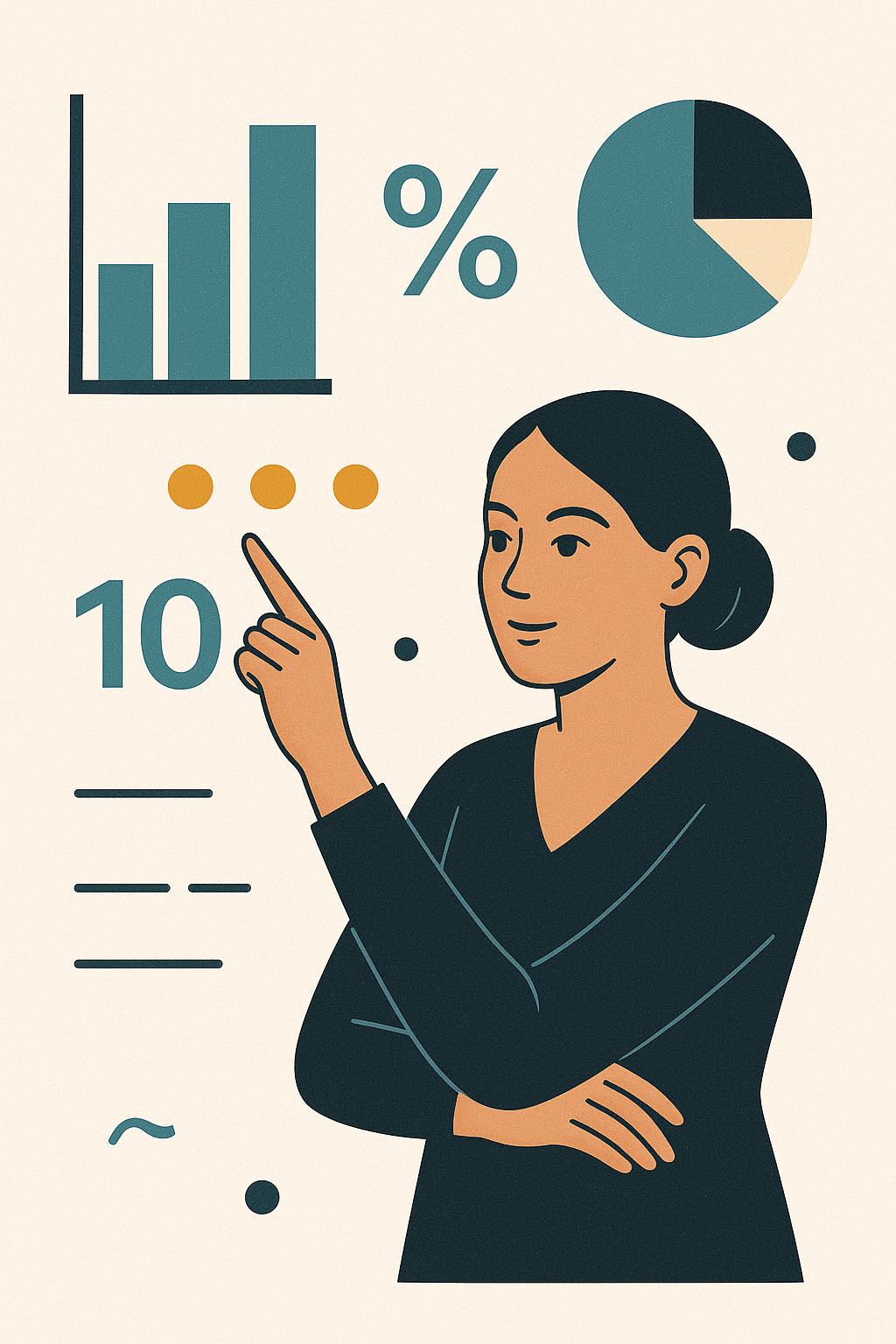
Let’s be real: when most people hear “data,” their brain jumps to complicated dashboards, business meetings, or math class nightmares. But the truth is, data isn’t just for tech people or number nerds. It starts with something you’ve been doing since childhood:
👉 Counting things
👉 Sorting them into categories
That’s it. That’s the origin story of all data science. And it’s way more fun (and useful) than it sounds.
🧮 Counting: The OG Data Move
From the second we learn to hold up fingers and say “one, two, three,” we’re learning to collect data. Counting is how we understand the world. It tells us how much of something exists. It gives us the ability to compare, track, and make decisions, even if we’re not consciously doing it.
Let’s play this out with real life:
Counting steps → Helps you figure out if you actually walked today or just made 7 trips to the fridge.
Counting how many hours you slept → Hello, self-care data. 💤
Counting how many subscriptions are auto-renewing → Oh look, a budgeting wake-up call. 📉
When we count, we give something weight. We make it real. And that’s powerful—because once something is counted, it can be questioned, improved, or celebrated.
📝 Try this: Track how many times you check your phone today. (No judgment—we’re in this together.) At the end of the day, count the number. That’s your data. What does it tell you?
🗂️ Categories: The Way Our Brain Organizes Chaos
Categories are how we make sense of what we’ve counted. Think of them like buckets or labels for grouping similar things.
They show up everywhere:
In your closet (shirts, jeans, things you swear you’ll wear someday)
In your inbox (newsletters, promotions, emails from your mom)
In your thoughts (work stress, creative ideas, random Taylor Swift lyrics)
And here’s the cool part: when we count within categories, we start to see patterns.
Let’s say you track how often you snack during the day. If you just count “10 snacks,” that’s one thing. But if you sort them into:
Sweet vs. salty
Healthy vs. comfort
Morning vs. afternoon vs. late-night
…you suddenly start understanding why and when you’re snacking. That’s not just data, that’s insight.
💡 Tiny truth: Organizing information isn’t about control. It’s about clarity. When we know what we’re dealing with, we make better choices—without judgment or overwhelm.
📊 Putting It All Together: Patterns, Decisions, and “Aha!” Moments
The real magic happens when counting and categories combine. That’s when everyday info turns into something we can learn from.
Example 1: Your Commute
Count how many days you hit traffic Categorize by time you leave the house → Boom: you figure out that leaving 10 minutes earlier saves you 25 minutes. That’s time-data ROI.
Example 2: Your Mood
Count your daily mood on a scale from 1–5 Categorize by sleep quality, weather, or workload → See trends in what helps or hurts your mental health
Example 3: Your Streaming Habits
Count how many hours you stream Categorize by genre (comedy, reality TV, documentaries) → Find out if your “one episode” is really “an entire emotional arc.”
These aren’t stats—they’re stories. Your stories. And the more we practice organizing our info this way, the more empowered we feel to change what’s not working and celebrate what is.
🧸 Why This Matters for Kids and Grown-Ups
This is where the “elementary” part of Data Elementary shines.
For kids, learning to count and categorize is the foundation of critical thinking. It helps them sort their thoughts, understand fairness (“He got 3 cookies, I got 2!”), and recognize patterns in their day.
For adults, it’s a gentle reminder that data isn’t just some external, professional thing. It’s personal. It’s the number of unread messages you avoid. The types of meals you crave. The hours that make you feel most alive.
You don’t need a degree to do this. You’re already doing it.
We’re just here to help you see it differently, and maybe have a little fun along the way.
🧩 A Tiny Challenge: Make a “Life Bar Chart”
Pick a simple, daily behavior. Maybe…
What types of drinks you’ve had today (coffee, tea, water, soda)
What kinds of tasks took up your time (meetings, focus work, errands)
Which moods showed up throughout the day (calm, annoyed, energized)
Create three categories. Count the entries.
Then sketch a bar chart, even if it’s on a napkin.
Congratulations: you just turned your life into a story you can see.
💗 Final Thought
Data doesn’t have to be cold, complicated, or corporate.
It can be kind.
It can be cute.
It can be yours.
So next time you catch yourself counting something, or mentally sorting things into categories, know that you’re already doing data. And that’s a beautiful thing.
Stay curious,
Sydney
 Data For Humans
Leave a comment