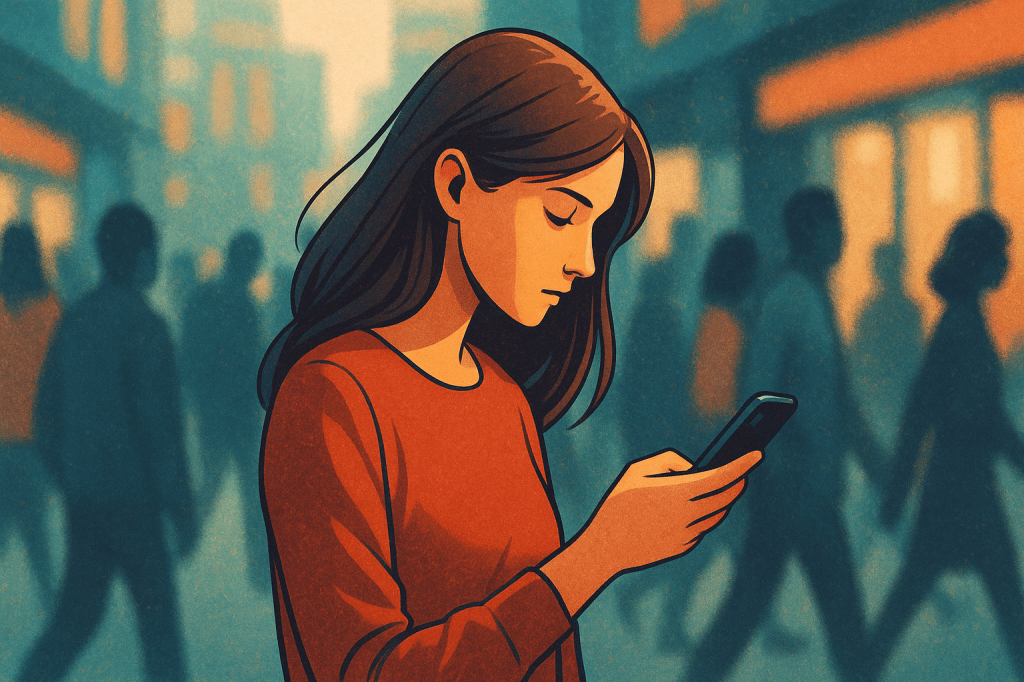
Did you just check your phone before reading this? Be honest.
If you did, you’re in good company. Most of us do! In fact, a recent study by Asurion found that the average person checks their phone 96 times a day. That’s once every 10–12 minutes we’re awake.
I’d bet my last cold cup of coffee that some of us are blowing right past that number without even noticing.
Now before we collectively spiral into tech guilt, let’s slow down and ask:
What’s actually going on here?
📱 It’s Not Just Habit—It’s Human
We reach for our phones for all kinds of reasons: to stay connected, to find a quick answer, to escape a boring moment, to double-check if that Amazon package has shipped (it hasn’t, but we’ll check again in 10 minutes just to be sure). It’s part dopamine, part curiosity, part digital lifeline.
Phone checking isn’t bad, it’s data. It tells a story. Each little tap, swipe, and scroll is a signal—showing us when we feel overwhelmed, bored, or disconnected. The problem isn’t the phone; it’s that we rarely take a moment to observe the pattern.
🧠 The Data You Don’t Even Realize You’re Creating
Every phone check creates tiny trails of data:
- App usage stats (Instagram: 45 minutes today, TikTok: um… yikes)
- Notifications cleared or ignored Battery drain (usually 80% emotions, 20% GPS)
- Screen time trends by time of day or app type
If you’ve ever opened your Screen Time summary and gasped audibly, you’re not alone. Instead of just recoiling in horror and then immediately ignoring it again, try this:
🔍 Try a One-Day Attention Audit
Before changing anything, just notice. That’s it.
Keep a simple log of:
- What time you pick up your phone
- What triggered it (notification, boredom, habit)
- What you thought you’d do vs. what actually happened (“Me: Just checking the weather. Also me: 20 minutes deep into wedding cake fails on YouTube.”)
🎯 What You’ll Probably Learn
You’re not addicted. You’re human. But your attention might be more scattered than you realized. This tiny behavior, repeated nearly 100 times a day, becomes a mirror for your focus, your energy, and sometimes your stress.
Understanding the data of your daily habits doesn’t have to be dry or techy, it can actually feel kind of freeing. Once you see the pattern, you get to decide whether it’s working for you or not.
So if you’ve checked your phone 12 times since you started reading this, no judgment! Start noticing what your data is trying to tell you.
Figure Friday takeaway: Sometimes, the most interesting dataset is you.
Stay curious,
Sydney
 Data For Humans
Leave a comment