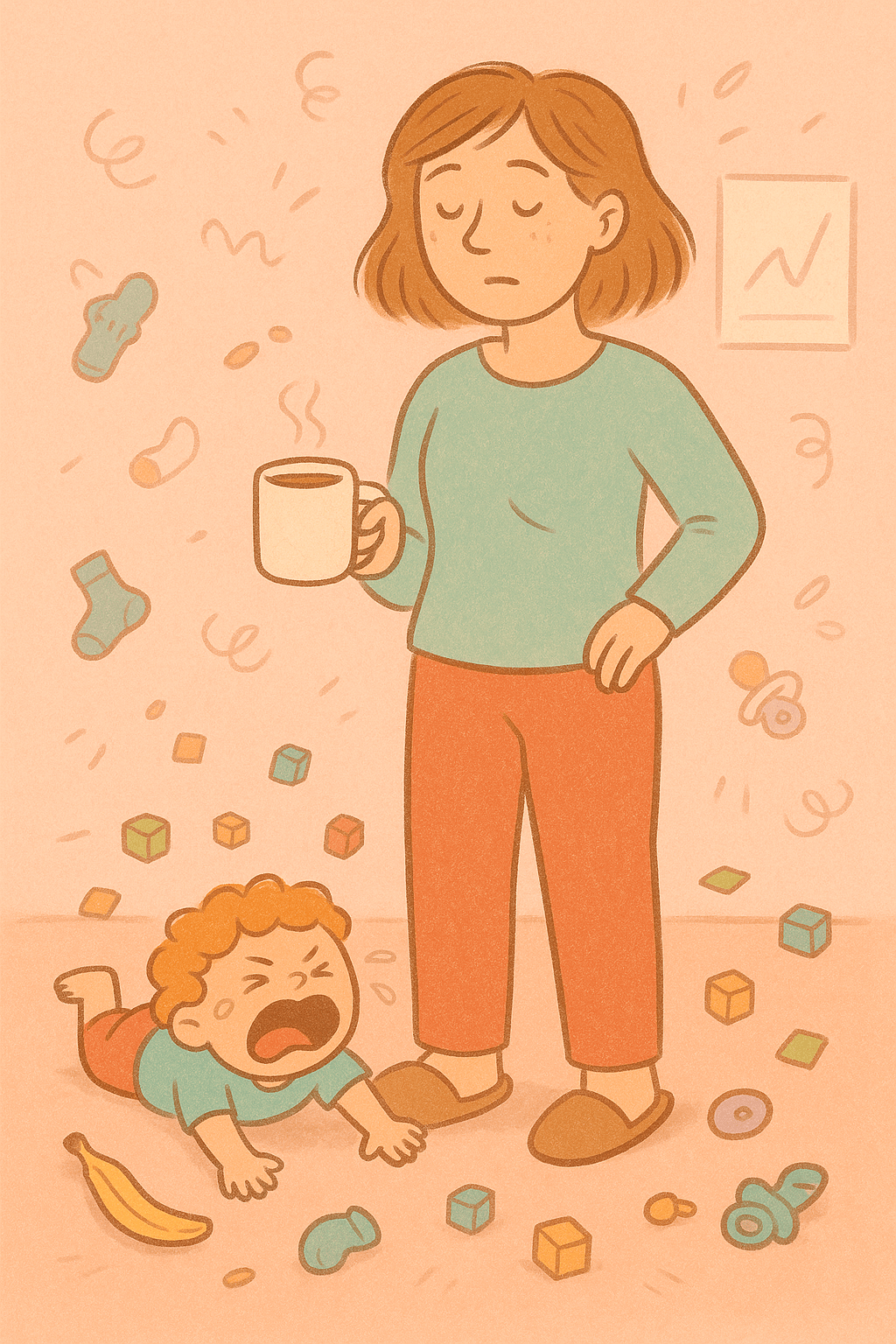
Let me preface this by saying: I love my toddler. I love his chubby cheeks, their mispronunciations of the word “spaghetti,” and their oddly specific demands like “I want the BLUE cup with the dinosaur but NOT the T-Rex, the other one.”
But I’m also a data person. So when the tantrums hit a certain volume and frequency, I did what any normal sleep-deprived parent with a spreadsheet addiction would do: I started tracking them.
Welcome to my totally legit, highly scientific toddler tantrum study.
Let’s dive into the data.
📈 Tantrum Frequency: Or, Why I Can’t Remember What Peace Feels Like
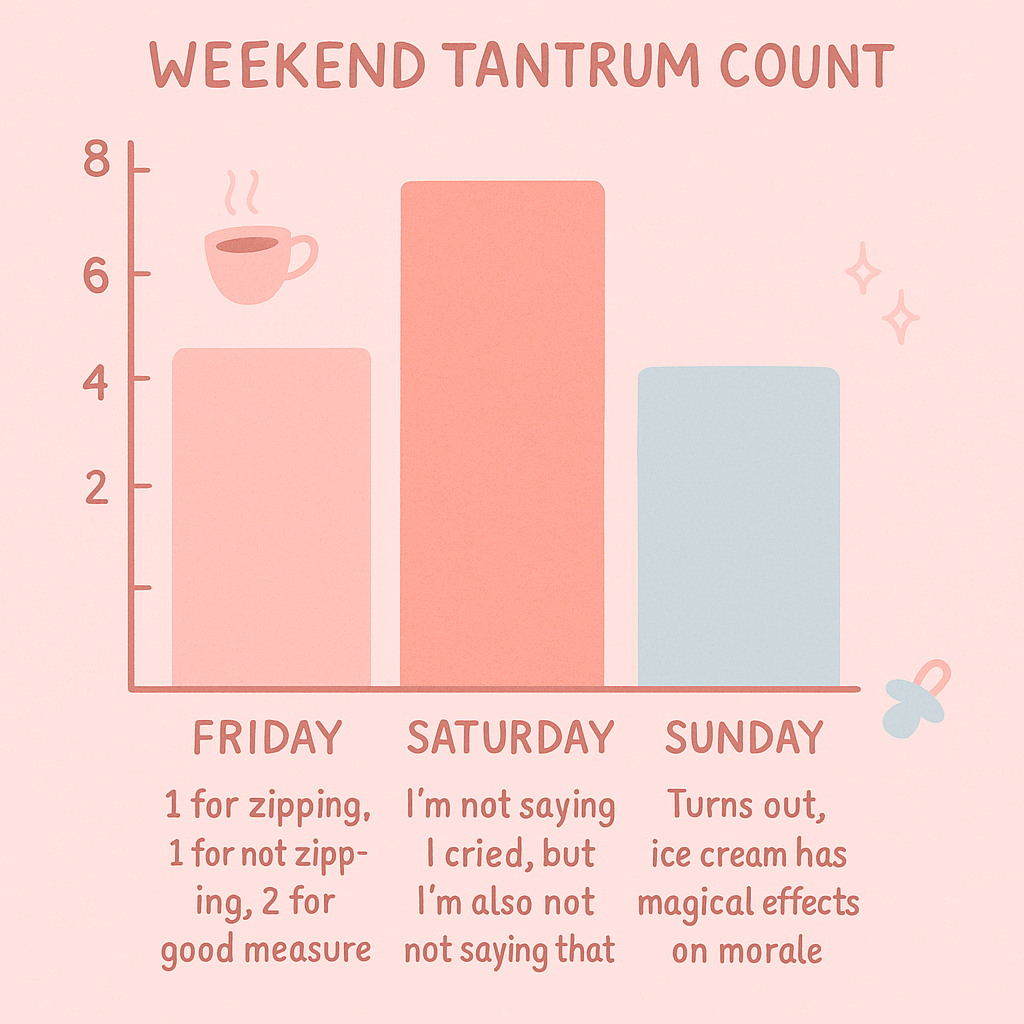
I created a simple bar chart of daily tantrum counts over the weekend.
Highlights included:
Friday: 4 tantrums – one because I zipped their jacket, another because I didn’t zip their jacket, and two for good measure.
Saturday: 7 tantrums. I’m not saying I cried, but I’m also not not saying that.
Sunday: Surprisingly low tantrum count! Turns out, ice cream has magical effects on morale.
Trendline summary: The number of tantrums is inversely correlated with when I am feeding our 3 month old or go to the bathroom.
⏱️ Tantrum Duration: A Timeline of Emotional Endurance
Charts make everything better, right? Here’s the average breakdown of a single tantrum:
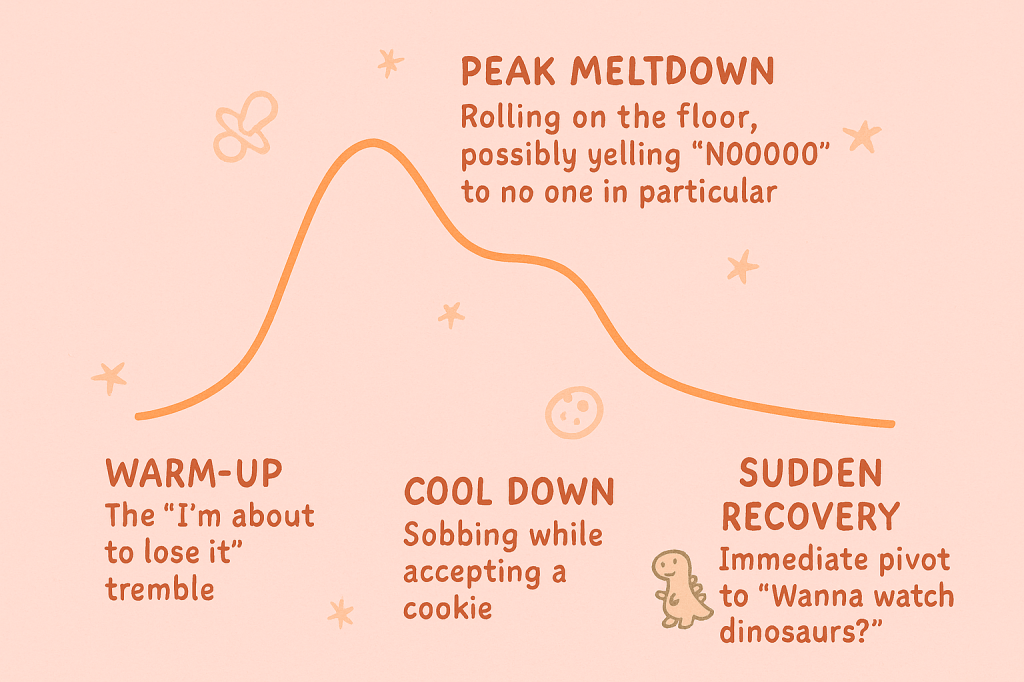
Warm-up (2 minutes): The “I’m about to lose it” tremble.
Peak Meltdown (7 minutes): Rolling on the floor, possibly yelling “NOOOOOO” to no one in particular.
Cool Down (4 minutes): Sobbing while accepting a cookie.
Sudden Recovery (1 second): Immediate pivot to “Wanna watch dinosaurs?”
Scientific note: There is no known explanation for how they can cry like it’s the end of days and then, five seconds later, casually ask for snacks like nothing happened.
🧠 Root Cause Analysis: Why Is My Toddler Actually Losing It?
I put together a very advanced pie chart showing the reasons for the tantrums. The results may shock you:
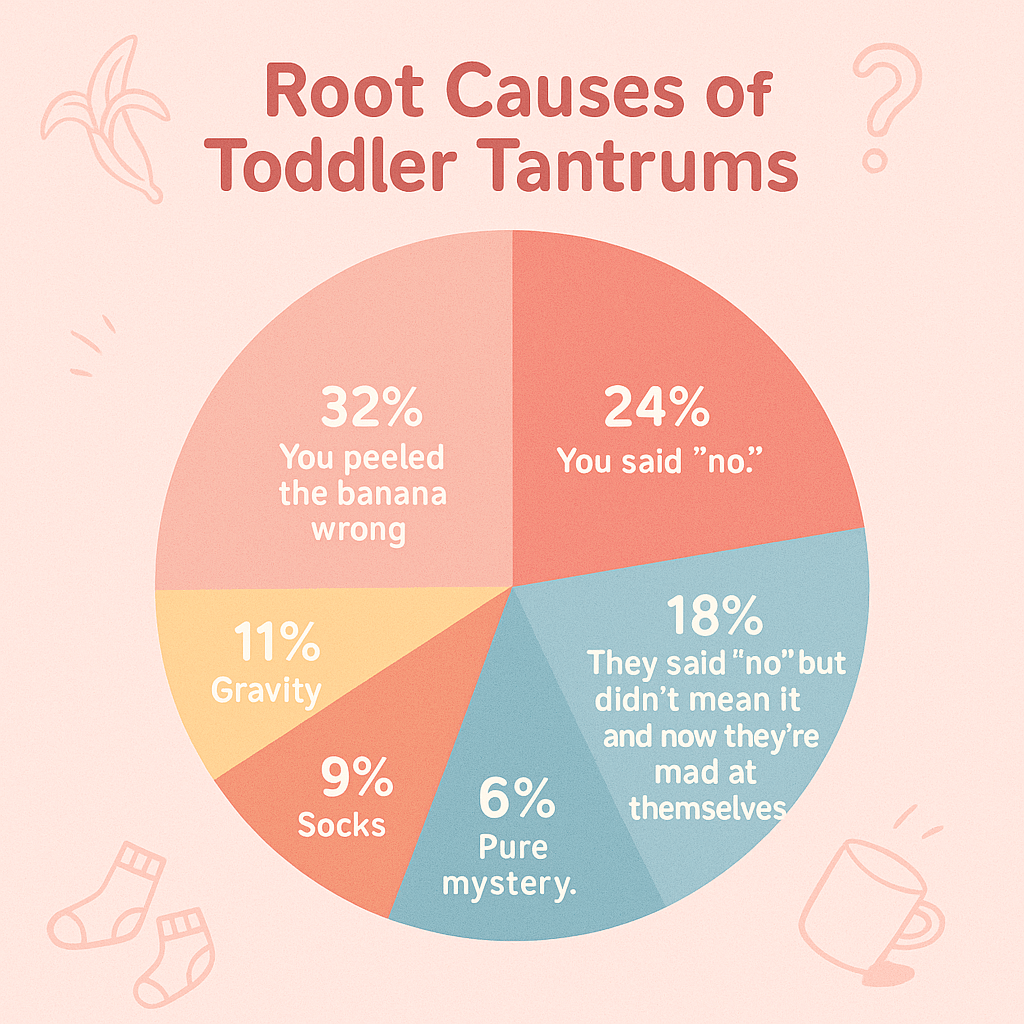
32% – You peeled the banana wrong.
24% – You said “no.”
18% – They said “no” but didn’t mean it and now they’re mad at themselves.
11% – Gravity (they dropped something).
9% – Socks.
6% – Pure mystery. No one will ever know.
Conclusion: Most tantrums originate in what I now call the “Banana Peel Zone.” Proceed with extreme caution.
🎓 Final Analysis: What I’ve Learned (Besides How to Cry Silently)
Parenting a toddler is like living with a tiny, emotionally unhinged scientist who is constantly stress-testing your household and your sanity. But tracking these tantrums helped me step back, laugh a little, and realize that some of the chaos has patterns. Patterns I can analyze, graph, and joke about.
Parents, we’re in this together. May your coffee be strong and your charts be color-coded.
Stay curious,
Sydney
 Data For Humans
Leave a comment